The gigawatt race: what AI capacity plans tell you about the frontier labs
AI build-out plans are now quoted in gigawatts and power gear, not chip counts. SpaceX, Meta, Amazon and Microsoft each describe the same constraint, and each is handling it differently.
The read: capacity is the product
Here's the short version. The companies building AI capacity now describe their plans in gigawatts of power, not in numbers of chips, and they describe demand as bigger than what they can supply. One of them expects to own more power, cooling and electrical equipment than GPUs by the end of next year.1 What follows from that: the companies that lock in power and sites early are the ones whose plans hold up.
That matters even if you never buy a GPU maker. The frontier labs mostly aren't listed, so the companies hosting them and selling them chips and capacity are the closest public read on how fast they're growing. Amazon says it has multi-year, multi-gigawatt commitments from the two largest AI labs for its Trainium chips.6
In our data, Meta Platforms leads our score, Microsoft is second and Amazon is third. Each is working on the same bottleneck from a different side: Meta through power deals, Microsoft through efficiency, Amazon through its own silicon and doubled power capacity.
SpaceX: from 2 gigawatts toward 10
The boldest numbers come from $SPCX. SpaceX expects to end this year with more than 2 gigawatts of compute.3 It expects cumulative compute online by the end of next year to be several times higher, possibly closer to 10 gigawatts.4
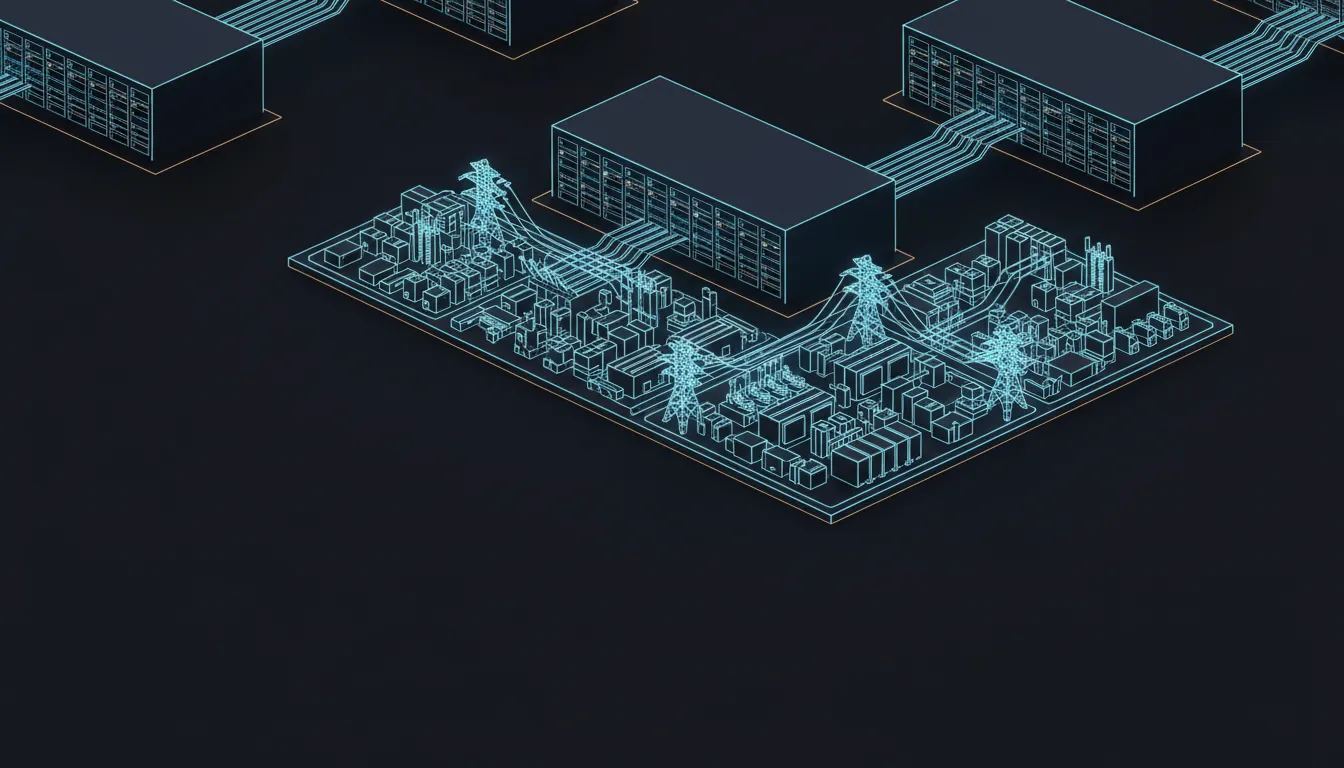
A gigawatt is a unit of power, about the draw of a large power plant's output. Sizing compute this way shows what the real limit is. The question isn't how many chips you can buy. It's how much electricity you can bring online, cool and wire up.
That's why the SpaceX comment on equipment stands out. The company expects to have far more power, cooling and electrical equipment than GPUs by the end of next year.1 If that holds, a growing share of AI spending goes to the physical plant around the chips, not only the chips themselves.
These are expectations from an August earnings call, not delivered capacity.3 The step from about 2 gigawatts to possibly 10 is the figure to check against each quarterly update.4
Meta: securing power before it needs it
Meta, which leads our score, is the clearest case of a company buying power ahead of demand. On its July call, Meta said it plans to maximize capacity for 2026 and 2027 because of demand constraints.2 Put simply, it's telling investors it can't build fast enough.
Its deals show what that looks like in practice. Meta announced a strategic venture with BlackRock to develop a new 1 gigawatt data center in El Paso, Texas.7 Separately, Oklo has announced plans for a 1.2 gigawatt power campus in Pike County, Ohio, tied to a prepayment agreement with Meta.8
A prepayment means paying for future supply up front, which is how a buyer gets ahead of a scarce input. Meta is lining up the power before the compute arrives, and that's the same order of work SpaceX describes.1
Amazon and Microsoft: silicon and efficiency
Amazon, third in our score, is attacking the bottleneck from two sides. It expects to have double the power capacity by the end of 2027 compared with what it had in 2025.9 It's also pushing its own Trainium AI chips, which hold multi-year, multi-gigawatt commitments from the two largest AI labs.6
Amazon says Trainium is being used by more and more companies, which it reads as a shift in market share.10 For anyone following the frontier labs, this is the most direct link in these facts. Lab demand shows up as Amazon's chip commitments, measured in gigawatts.
Microsoft, second in our score, puts the stress on getting more out of the capacity it already has. The company says its Azure cloud platform can deliver efficiencies that bridge gaps between customer demand and supply.11 When supply is short, squeezing more work out of each data center is a form of new capacity.
Margins are holding up while Microsoft does it. Its gross margin was better than expected at 65%, per its fiscal fourth-quarter call.12 One caveat: that fact carries medium confidence in our data, so treat it as a signal to confirm against the next report.12
Where the trade-offs sit
Racing for capacity has costs. An industry research note says Meta's custom MI450X GPU cuts scale-up bandwidth to 900GB/s, against 1,800GB/s for the standard part, and that this harms generative AI performance.5 Scale-up bandwidth is how fast chips inside one system share data. It matters most for training and serving large models.
That's the tension in the custom-silicon push. Custom chips can ease supply and cost, but if performance per gigawatt slips, a company needs more power for the same output, and power is the input everyone is short of.1,5 Meta leads our score anyway, so for now its power deals count for more in our data than this concern.7,8
The same question applies to Amazon's Trainium. The commitments from the largest labs suggest buyers accept the trade-offs today.6 Whether that lasts as models get bigger is the thing to test.
What to watch next
The useful way to follow this theme is to track capacity promises against delivery. For SpaceX, that means whether the year ends above 2 gigawatts of compute and whether the path toward roughly 10 gigawatts holds.3,4 For Amazon, it means progress toward doubled power capacity by the end of 2027.9
For Meta, watch the El Paso venture and the Oklo campus move from announcements to construction.7,8 For Microsoft, watch whether Azure's efficiency gains keep margins near the 65% it reported.12,11
The common thread is simple. When companies say they're limited by demand constraints and power, the ones that secure electricity, sites and equipment early decide how fast the frontier labs can grow.1,2 Those are the numbers worth checking each quarter.
What would change our view
- SpaceX ends the year well short of the 2 gigawatts of compute it expects, or scales back the path toward 10 gigawatts.3,4
- Meta's El Paso venture or the Oklo power campus stalls before construction.7,8
- The largest AI labs scale back their multi-gigawatt Trainium commitments to Amazon.6
- Bandwidth limits like the MI450X's show up as weaker AI performance in Meta's results.5
If you build or buy data center capacity, which is harder to secure for 2027 deliveries right now: GPUs, or the power, cooling and electrical gear around them?
Answer on XSources
- 1Earnings call SPCX FY2026 Q2, transcript, Aug 4, 2026.
- 2Earnings call META FY2026 Q2, transcript, Jul 29, 2026.
- 3Earnings call SPCX FY2026 Q2, transcript, Aug 4, 2026.
- 4Earnings call SPCX FY2026 Q2, transcript, Aug 4, 2026.
- 5Industry research note, research note, Sep 14, 2026.
- 6Earnings call AMZN FY2026 Q2, transcript, Jul 30, 2026.
- 7Earnings call META FY2026 Q2, transcript, Jul 29, 2026.
- 8Oklo Inc. 10-K (filed 2026-03-17), filing, Oct 6, 2026.
- 9Earnings call AMZN FY2026 Q2, transcript, Jul 30, 2026.
- 10Earnings call AMZN FY2026 Q2, transcript, Jul 30, 2026.
- 11Earnings call MSFT FY2026 Q4, transcript, Jul 29, 2026.
- 12Earnings call MSFT FY2026 Q4, transcript, Jul 29, 2026.
For information only. Not investment advice.
Related research
All research →
AI security's share war: how to read who is gaining ground and who is giving it up
The latest earnings calls and 10-K filings point to one theme: buyers are consolidating security onto fewer platforms. Here is who the reports show taking deals, and from whom.
How to spot pricing power in AI customer software before it shows up in price lists
The latest earnings calls from four customer-engagement software companies point the same way. Pricing power shows up as upsell, retention and margins, and AI features are giving customers a reason to spend more.
The seat is no longer the price: how software vendors are repricing AI
Six software companies described their pricing in their latest quarters. Almost none of them described a seat. Salesforce's $1.5 billion Agentforce line is the clearest evidence of what replaces it.